
SABIC HDPE BM1052 is a high molecular weight blow molding grade engineered for large industrial containers. Its broad molecular weight distribution delivers parison stability and high environmental stress crack resistance, the two properties that decide wall uniformity and service life of big parts.
Converters use BM1052 for 220 L drums, fuel tanks and bulky technical containers where thick, even walls and long-term load resistance are required.
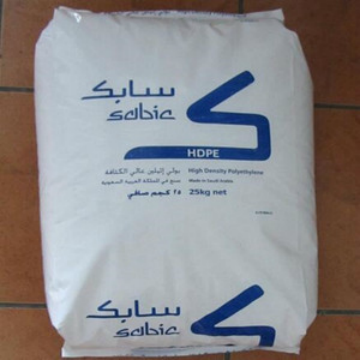
SABIC HDPE 25 kg bag
Values are typical and should be verified against the mill test report for the specific lot.
| Property | Value | Test method |
|---|---|---|
| Density | 0.952 g/cm³ | ISO 1183 |
| MFR (2.16 kg) | 0.05 g/10min | ISO 1133 |
| MFR (21.6 kg) | 9 g/10min | ISO 1133 |
| Environmental stress crack resistance | > 1200 h | ASTM D1693B |
| Tensile stress at yield | 30 MPa | ISO 527 |
| Secant modulus | 1200 MPa | ISO 527 |
| Izod impact | 237 J/m | ISO 180 |
| Shore D hardness | 65 | ISO 868 |
| Vicat softening temp | 128 °C | ISO 306 |
| Brittleness temperature | < -75 °C | ISO 812 |
The differentiation of BM1052 is its blow molding window: a melt that holds the parison without sag yet fills the mold completely, combined with ESCR above 1200 hours so the finished drum or tank resists cracking under sustained load and aggressive media.
For a 220 L drum or a fuel tank, wall thickness control is the difference between material cost and field failure. BM1052 keeps the parison stable long enough for multi-layer and large-shot tools, then delivers the low-temperature toughness needed for outdoor and transport duty.
Parison stability and ESCR
Pre-dry pellet at 80-90 °C if surface moisture is present before extrusion.
Extrusion melt temperature 180-220 °C for a stable parison.
Hold the parison briefly, then blow at moderate pressure for an even wall.
Mold cooling 15-40 °C; allow full crystallisation before ejection.
Industrial packaging with thick uniform walls.
Automotive and machinery reservoirs.
Bulky single- and multi-layer parts.
Standard valve bag for palletised shipment.
FIBC for reduced handling and waste.
Bulk delivery for continuous lines.
How melt strength and sag control wall thickness of large containers.
Read moreReading FNCT hours and what they mean for service life.
Read moreDocumentation and allocation tips for drum converters.
Read moreTell Quinn your volume and destination for a BM1052 wholesale price.
Request a Quote